“Productivity” gets used constantly in dairy processing conversations, but it rarely means just one thing.
Ask a production manager, and the answer usually goes beyond simple throughput. Output matters, but it is only one piece of how a plant actually performs day to day. Productivity also includes how often systems are running, how long they are down for cleaning, and how much operator attention they require to stay stable.
When those factors are broken apart, a clearer picture emerges. Productivity in dairy processing is built from three operational drivers: uptime, cleaning time, and operator efficiency.
Output is the visible metric – but not the limiting one
Production volume is easy to measure. Plants track it continuously, and it often becomes the default definition of productivity, but output is constrained by everything happening around it.
A membrane system may be designed for a certain throughput, but that capacity is only realized when the system is running at steady conditions. Fouling, cleaning interruptions, and instability all reduce the actual time spent producing.
Higher sustainable flux plays a role here. When membranes maintain higher operating flux over time, systems can process more product without adding more equipment . This is one of the reasons productivity improvements are often tied directly to membrane performance.
Still, even strong flux performance does not guarantee high productivity if uptime is limited.
Uptime is where productivity is gained or lost
Uptime determines how much of the day is spent making product versus managing the system.
In dairy processing, cleaning programs are one of the largest drivers of lost uptime. What appears to be a simple multi-step cleaning process often expands significantly when flushes and transitions are included. A “four-step” cleaning program can easily become ten or more steps in practice.
Each of those steps takes time. Each requires water, chemicals, and energy. And most importantly, each represents time when the system is not producing.
Even small reductions in cleaning time translate directly into more available production hours. Removing a single step from a cleaning program can return roughly an hour of operation back to production in many systems.
That time recovery compounds over days and weeks. It is one of the most direct ways to increase real productivity without adding new equipment.
Cleaning time is an operational cost center
Cleaning is necessary, but it is also one of the most resource-intensive parts of membrane operation.
Every step in a cleaning program requires:
- Chemical usage
- Freshwater input
- Energy for heating and circulation
- Wastewater treatment capacity
These costs accumulate quickly. In one economic model comparison, total daily cleaning-related costs were reduced significantly when fewer cleaning steps were required, with annual savings reaching hundreds of thousands of dollars.
More importantly, cleaning time is not just a cost – it is lost production time. Reducing cleaning frequency or duration improves both cost structure and output capacity at the same time.
This is why cleaning program design has a direct impact on productivity, not just maintenance.
Operator efficiency is often overlooked
Operator time is rarely included in formal productivity calculations, but it should be.
Complex cleaning programs and unstable systems require constant attention. Operators spend time adjusting conditions, monitoring performance recovery, and troubleshooting fouling-related issues.
In contrast, systems with stable performance and simpler cleaning programs free operators to focus on higher-value tasks. That shift matters at scale. It reduces labor intensity and improves overall plant efficiency.
Customer installations have shown that simplifying cleaning programs can reduce daily operator workload, including eliminating manual cleaning tasks and reducing the need for repeated intervention.
This is a less visible form of productivity, but it directly impacts how efficiently a plant runs.
Why membrane selection plays a central role
Membranes sit at the center of all three productivity drivers.
Fouling behavior determines how quickly performance declines. That affects both uptime and cleaning program length. Cleaning response determines how easily systems recover, which impacts cleaning duration and consistency. Flux stability determines how much product can be processed between cleanings.
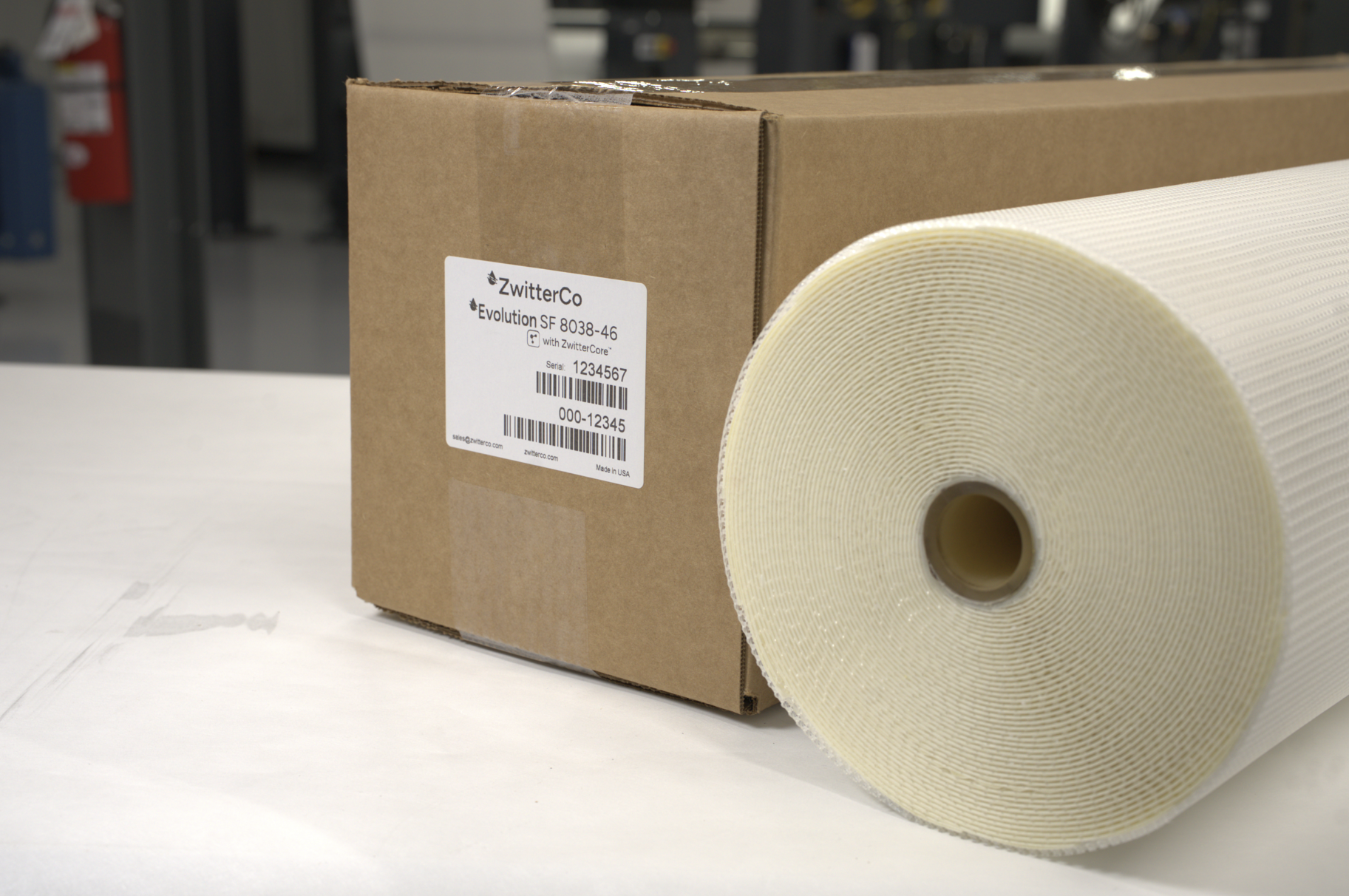
ZwitterCo Evolution membranes address these factors through their zwitterionic chemistry, which creates a highly hydrophilic surface that is inherently anti-fouling and minimizes gel layer formation. This leads to higher sustainable operating flux and more effective cleaning recovery.
In practice, that translates to:
- Shorter, simpler cleaning programs
- More consistent uptime
- Higher sustained throughput
These changes show up as productivity gains because they affect how the system operates over time, not just at peak performance.
Production managers often describe productivity in terms of uptime, maintenance flexibility, and system reliability alongside output. Membrane behavior directly influences each of those factors.
Redefining productivity in practical terms
When productivity is defined only as output, it misses the operational realities that determine performance. A more accurate definition looks at how much time a system spends producing, how efficiently it is cleaned, and how much effort is required to keep it running. Improving productivity means increasing production hours, reducing cleaning burden, and stabilizing operations.
If you are evaluating membrane performance in dairy and food processing, those are the metrics that actually determine results.
If you want to understand how Evolution membranes impact uptime, cleaning programs, and overall system performance, reach out to ZwitterCo to discuss your specific process.