In Episode 5 of ZwitterCo Unfiltered, Jon Goodman and Lyndsey Pence take a deeper look at membrane chemistry, membrane structure, and how different membrane types are manufactured and used across food and dairy processing applications.
The discussion covers ultrafiltration (UF), reverse osmosis (RO), thin-film composite membranes, pore size distribution, and the zwitterionic chemistry behind Evolution membranes. The episode also explores why fouling, protein passage, and cleaning programs continue to shape membrane performance in dairy processing.
A Different Type of Membrane Chemistry
One of the main themes throughout the episode is how Evolution membranes differ from conventional polyethersulfone (PES) UF membranes.
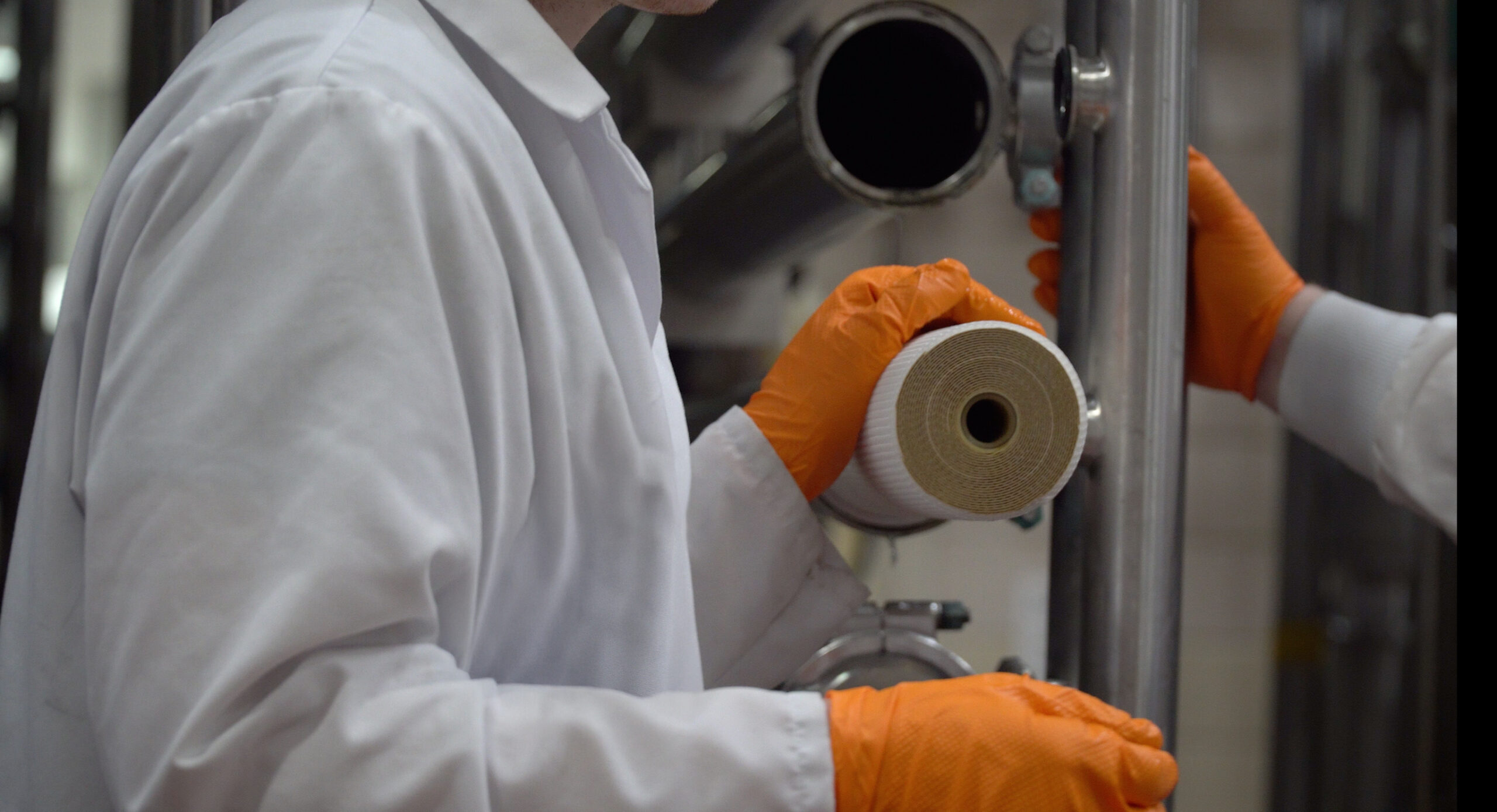
As Lyndsey explains, conventional UF membranes are asymmetric polymer membranes that have been used for decades. Evolution PCM and SF membranes, however, are thin-film composite membranes with three layers: a support backing, a UF layer, and a permanent zwitterionic layer that performs the active separation.
That zwitterionic chemistry is what gives the membranes their anti-fouling properties.
The episode explains that zwitterions are extremely hydrophilic, meaning they are strongly water loving. Because of the positive and negative charges present in the zwitterionic structure, organics have difficulty adhering to the membrane surface. Jon and Lyndsey describe this as the reason customers see anti-fouling performance in operation.
The discussion also explains how the zwitterionic layer self-assembles onto a hydrophobic backbone that provides strength and structure to the membrane.
Why Fouling and Cleaning Matter
Another major topic in the episode is membrane lifetime and the relationship between fouling, cleaning intensity, and protein retention.
Jon points out that UF membranes in protein concentration applications typically fail for one of two reasons: fouling or protein passage. Over time, many conventional membranes begin leaking protein after months of operation. The discussion connects this directly to cleaning conditions. According to Lyndsey, membrane lifetime is heavily impacted by pH extremes, temperature extremes, and aggressive cleaning programs.
Because zwitterionic membranes resist fouling more effectively, they may not require cleaning as often or as aggressively. The episode explains that this can extend membrane lifetime while helping maintain protein retention over time.
The hosts also discuss lactose passage and explain that current data shows Evolution membranes performing comparably to conventional membranes, with no noted increase in lactose rejection that would negatively impact applications like ultrafiltered milk or whey protein isolate (WPI) processing.
Understanding Pore Size and Membrane Manufacturing
A large portion of the episode focuses on how UF membranes are manufactured and why pore size distribution matters.
Jon and Lyndsey explain that conventional UF membranes rely on tightly controlled casting conditions involving solvents, temperature, humidity, and oven conditions. These factors influence both pore size and pore density. The episode highlights that an ideal membrane would have perfectly identical pore sizes and a high density of pores to maximize flux while maintaining controlled rejection.
In reality, however, pore size distribution varies across membranes.
One of the more technical discussions in the episode centers on the fact that molecular weight cut-off is not a perfectly uniform measurement. Jon explains that while many pores may cluster around the target range, membranes often contain a long tail of larger pores that contribute to protein passage.
This discussion also connects to testing methodology. Lyndsey notes that small flat-sheet tests or small membrane elements may not fully represent large-scale system performance because pore size distribution becomes more representative as membrane area increases.
Thin-Film Composite Membranes and RO
The episode also walks through the history and structure of RO membranes, including cellulose acetate membranes, polyamide RO chemistry, and thin-film composite membrane construction. Jon and Lyndsey explain that most modern RO membranes are based on polyamide chemistry originating from the Cadotte patent in the late 1970s.
Evolution RO membranes differ because they incorporate zwitterionic copolymer technology on top of the polyamide surface. This structure is designed to maintain standard RO performance characteristics while adding anti-fouling benefits. The discussion also briefly covers inorganic membrane technologies, including ceramic and stainless steel membranes, as well as hollow fiber membrane designs.
The Bigger Takeaway
Episode 5 provides a more technical look at membrane science and explains why membrane chemistry directly impacts fouling, cleaning programs, productivity, and long-term system stability.
Throughout the conversation, Jon and Lyndsey repeatedly connect membrane structure back to real operational challenges in dairy processing applications, especially protein concentration and RO polishing systems.
The episode reinforces several key themes:
- Anti-fouling membrane chemistry changes how organics interact with membrane surfaces
- Cleaning intensity plays a major role in membrane lifetime and performance
- Pore size distribution impacts separation and protein passage
- Thin-film composite membrane structures allow additional functional chemistry layers
- Higher sustainable operating flux and simpler cleaning programs remain critical priorities for processors
Have a question you want us to cover in a future episode? Contact us today.