Germany’s digestate regulations are among Europe’s strictest. Here’s what that means for treatment and compliance.
Digestate management in Germany is becoming structurally harder. Tightening fertilizer regulations, shrinking spreading windows, and rising operational costs are forcing AD plant operators and their technology partners to rethink how they handle what comes out the back end of the process.
For facilities relying on membrane treatment, the question is no longer just whether the system works – it’s whether it can hold up under conditions that are getting more demanding every year.
A Regulatory Framework That Has Run Out of Patience
Germany’s digestate rules operate on two overlapping layers that together leave operators with narrowing room to maneuver.
1. EU Nitrate Directive
The first is the EU Nitrate Directive, implemented through the Fertiliser Ordinance (DüV). Unlike most EU member states, Germany has designated its entire territory as an NVZ – the 170 kg N/ha/year limit applies everywhere.
Within that, red areas (rote Gebiete) under §13a DüV impose an additional mandatory 20% nitrogen reduction, and these zones are expanding. Spreading windows are further constrained by strict autumn blocking periods, a ban on broadcast application in favor of mandatory band injection, and a requirement for 9 months of on-site storage capacity for larger operations.
For large dairy, swine, and food-waste AD plants, this creates a structural mismatch: digestate production scales with feedstock throughput, but available spreading capacity doesn’t. When nitrogen loads exceed what nearby land can legally absorb within the permitted windows, digestate stops being a by-product and becomes a regulated liability.
2. Organic Waste Ordinance (BioAbfV)
The second layer is the Organic Waste Ordinance (BioAbfV), which governs treatment, monitoring, and reuse approval. Updated thresholds effective May 2025 tightened contaminant limits significantly – PFAS capped at 100 µg/kg, lead at 120 mg/kg, and organic waste exceeding 3% contamination can be rejected from land application outright.
For a country operating more than 7,000 AD and biogas facilities, these aren’t abstract standards. They determine whether digestate qualifies for land use or gets treated, hauled, and disposed of at cost.
Three Problems That Don’t Go Away on Their Own
Nutrient loads and spreading capacity are structurally misaligned
As German AD plants scale, nitrogen output frequently exceeds what operators can legally apply within DüV’s permitted windows – particularly in red areas where the additional 20% reduction applies. The forced choice is volume reduction through treatment, expensive third-party hauling, or long-term storage that adds CAPEX and compliance risk. Membrane-based treatment addresses this directly by separating digestate into concentrated nutrient fractions and reusable or dischargeable water – reducing the volume that needs to be stored or spread. But only if the RO system holds up on the actual feed.
Hauling and storage aren’t temporary but structural OPEX
DüV’s 9-month storage mandate, autumn blocking periods, and band-application requirements mean German operators carry permanent infrastructure and logistics costs with no seasonal off-ramp. Every percentage point of volume reduction through membrane treatment shrinks that burden proportionally. RO permeate can represent close to 50% of input digestate mass – a well-performing system cuts storage and hauling volume almost in half, and that difference compounds across years of operation.
Water reuse is constrained by treatment reliability
Discharge quality for treated digestate in Germany is defined case-by-case per receiving water body, making discharge pathways uncertain. Internal reuse applications (process water, polymer preparation, cleaning) are the more predictable route. But permeate quality has to be consistent enough to actually substitute for fresh water, and conventional RO under organic fouling pressure doesn’t deliver that reliably.
Why Digestate Is Hard on Conventional RO Membranes
Digestate’s high fouling potential — dissolved organics, fine solids, and variable contaminant loads that shift with feedstock — makes organic fouling the dominant failure mode for conventional RO. Fouling drives more frequent cleaning, higher chemical consumption, inconsistent flux recovery, and shorter membrane life. A membrane running partially fouled between CIP cycles isn’t performing at rated rejection — and for facilities operating under BioAbfV thresholds and DüV constraints, that variability has direct compliance consequences.
Where ZwitterCo Elevation Membranes Fit
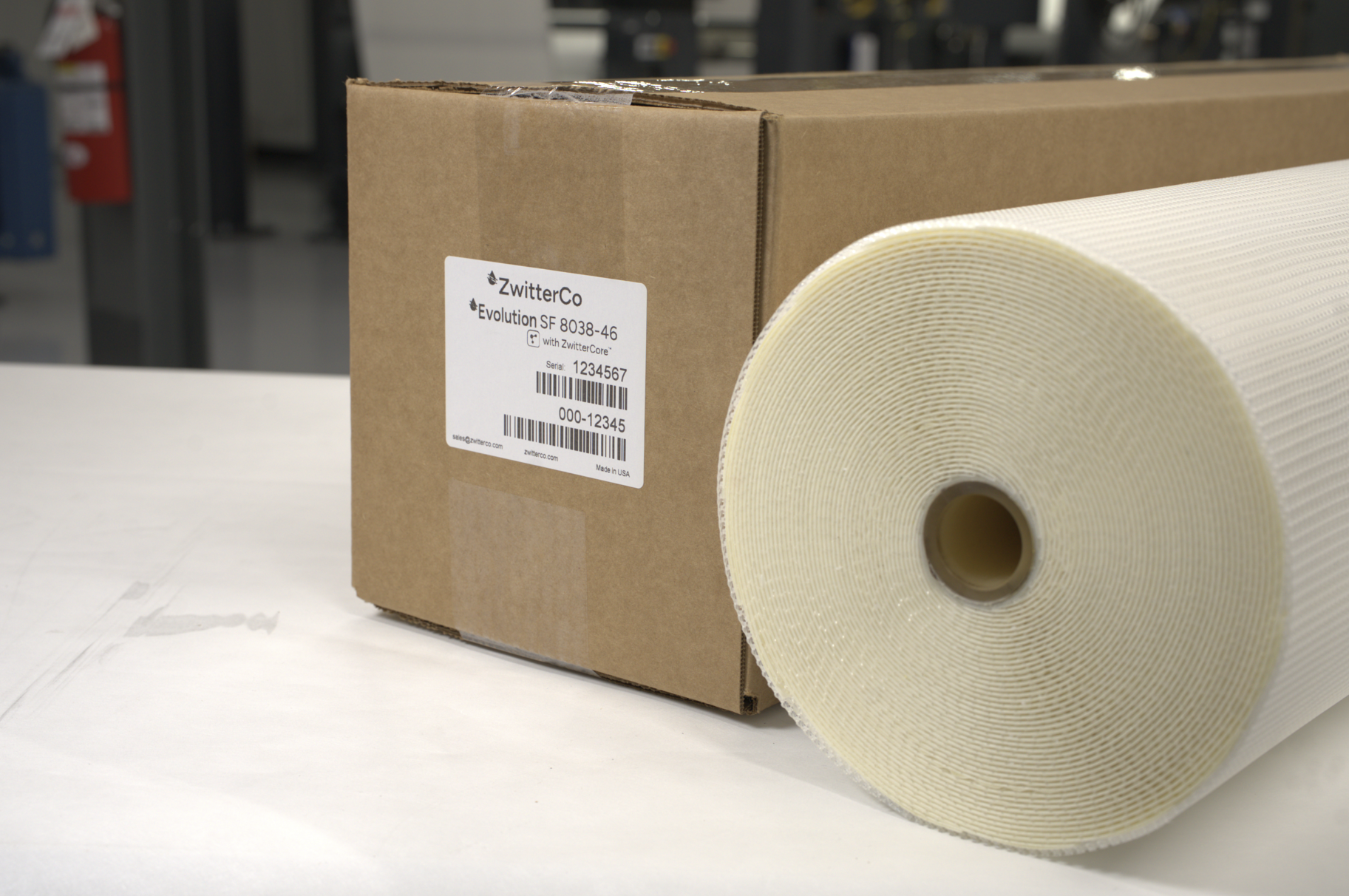
ZwitterCo Elevation RO membranes are engineered for streams affected by organic fouling. ZwitterShield™ technology permanently bonds zwitterionic chemistry to the membrane surface, creating a hydrophilic barrier that resists irreversible organic adhesion – the mechanism that degrades conventional membranes on digestate feeds.
With industry-leading tolerance to high organic loads, Elevation RO membranes maintain stable performance where conventional systems struggle, enabling 50–70% liquid volume reduction, reduced cleaning frequency, and higher uptime.
For operators managing storage obligations, hauling costs, and BioAbfV compliance simultaneously, consistent performance matters more than peak performance. Elevation membranes are one-for-one replacements for industry-standard RO elements – no system redesign, no requalification, accessible for new builds and retrofits alike.
The Direction Is Clear
Germany revised its fertilizer legislation in 2017 and again in 2020 following infringement proceedings by the European Commission, and despite these reforms, nitrate pollution of near-surface groundwater remains largely unchanged. The 2025 BioAbfV contaminant updates, sustained DüV enforcement, and expanding red-area designations signal that Germany’s trajectory is toward stricter oversight, not less.
These digestate regulations reflect a broader European trend. Higher standards, stricter enforcement, and reduced tolerance for contamination are becoming the norm. Technologies that worked under looser limits are being pushed to their practical limits.
Facilities that invest now in membrane treatment designed to handle organics-affected streams are better positioned to scale, stay compliant, and avoid the structural OPEX trap of permanent hauling and storage dependence. Those that don’t find the cost in logistics, storage infrastructure, and regulatory exposure – rising alongside the standards themselves.
Contact us to learn how ZwitterCo Elevation membranes support stable, cost-effective digestate treatment in German AD operations.