Water scarcity and tightening environmental regulations are reshaping how landfill operators think about leachate. What was once purely a disposal problem is increasingly an opportunity – treated leachate permeate can replace potable water for on-site dust suppression and equipment washing, cutting costs and reducing environmental footprint at the same time. But unlocking that opportunity means navigating a regulatory framework that, while increasingly favorable to reuse, still sets clear quality and monitoring requirements.
The Regulatory Landscape: Reuse is Encouraged, but Not Unregulated
- The Environment Code (Code de l’Environnement) in France requires that any reuse of treated wastewater must avoid risk to human health and environment. Competent authorities are empowered to set chemical and microbiological standards on a site-by-site basis, which means the burden of proof sits with the operator.
- At the EU level, Regulation (EU) 2020/741 lays down minimum requirements for the safe reuse of treated urban wastewater. While its primary focus is on agricultural reuse, its principles (quality classes, monitoring, risk management) are used increasingly as benchmarks for industrial reuse as well. The regulation became directly applicable in Member States on 26 June 2023.
- Guidance published by the European Commission in 2022 further clarifies how to apply 2020/741, including risk management, monitoring frequencies, and allowable parameter thresholds depending on reuse category.
- For non-potable industrial applications like dust suppression and truck or equipment washing, operators typically aim for permeate quality comparable to Class A or B: low COD and BOD, low turbidity, and minimal microbiological risk. The specific parameters that matter most in practice are organic load (COD/BOD), suspended solids and turbidity (which affect both usability and compliance), and pathogens — though microbiological standards for washing and dust suppression are generally less stringent than for irrigation.
From compliance burden to operational asset
The challenge for most leachate treatment systems is that achieving discharge compliance and achieving reuse-grade quality are not the same target. Discharge permits often allow organic loads and turbidity levels that would be unsuitable for reuse – meaning a system designed purely for compliance may fall short of what’s needed to put the permeate to work.
This is where membrane technology becomes the differentiator. Reverse osmosis membranes capable of consistent, high-rejection performance can bridge the gap between compliance-grade and reuse-grade output – but only if they can maintain that performance reliably in the face of leachate’s notoriously variable and challenging feed conditions.
Proven results at Sytraival
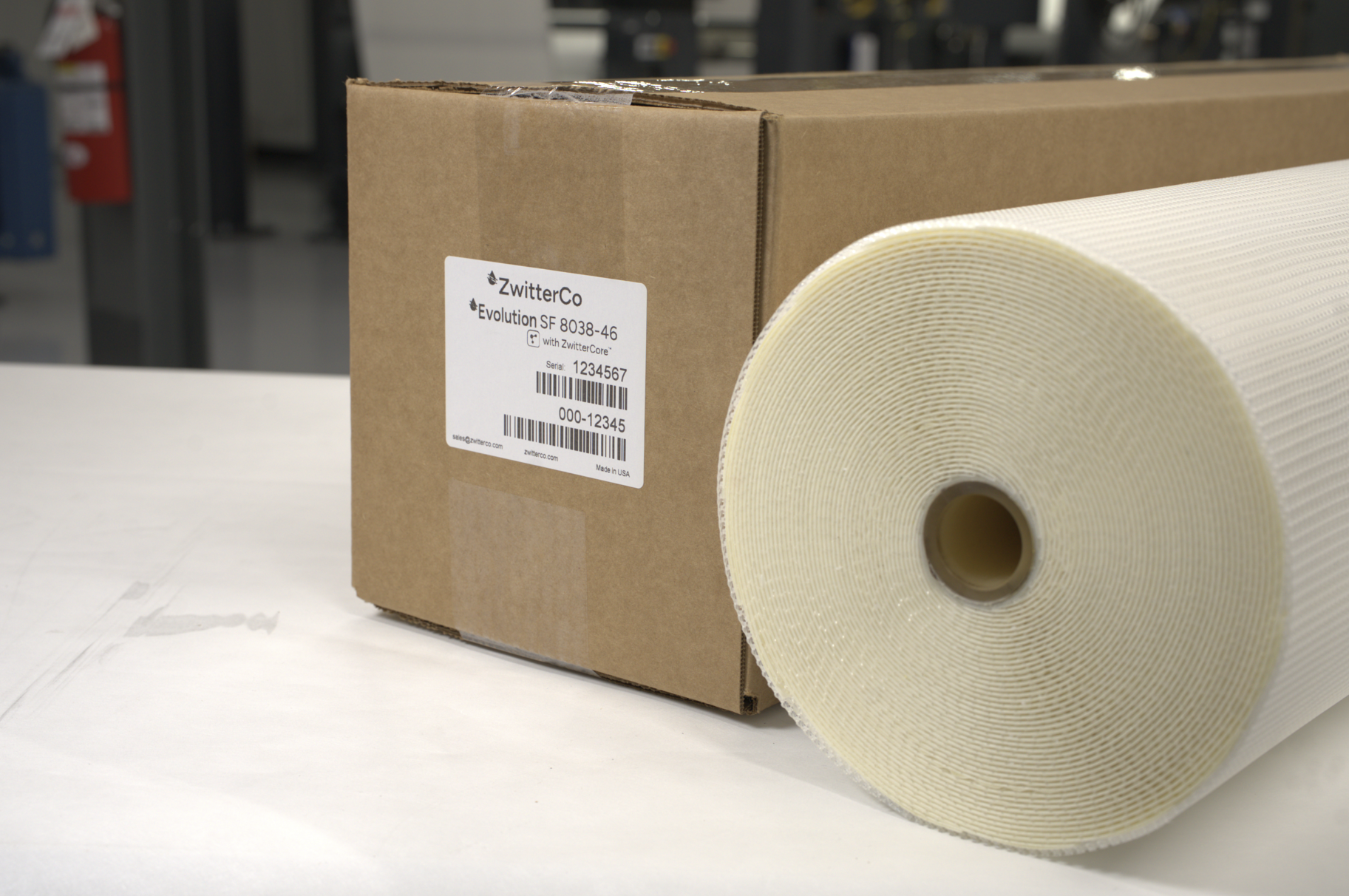
At Serpol’s Sytraival landfill site, the treatment objective was set higher than standard discharge compliance from the outset: the goal was permeate suitable for reuse in on-site dust suppression and washing operations. Using ZwitterCo Elevation RO membranes, Serpol achieved COD reduction exceeding 99%, with BOD reduced to similarly negligible levels – producing a permeate that is biologically inert and very low in organics. Metals and nutrients, including phosphorus and nitrogen compounds, dropped to below detection limits or to levels that pose no corrosion, scaling, or safety risk in reuse applications.
Critically, the system maintained stable operation with long runs between cleanings, meaning reuse-grade water remained consistently available rather than intermittently. The permeate quality met or exceeded the thresholds that non-potable reuse permits and 2020/741 quality class guidelines would demand in France.
How Elevation RO Membranes Enable Compliance & Reuse Potential
- High Rejection Rates — Removing (or reducing to negligible levels) organics (COD/BOD), metals, nutrients.
- Stable Operation — Resistant to fouling, less downtime, persistently high permeate quality.
- Low TSS / Turbidity — Ensures water is clean for washing & dust suppression without frequent pretreatment.
- Risk Management & Monitoring Friendly — Facilities using Elevation membranes can more easily satisfy monitoring requirements under 2020/741 (chemical & microbiological), and permit conditions under French regulatory authorities.
Benefits & Regulatory Alignment for Landfill Operators
- Reduction in potable water use – Using reuse water reduces costs and environmental footprint.
- Regulatory alignment and potential incentives – Authorities may view reuse favorably; grant programs / water agencies may support projects demonstrating circular use.
- Reduced discharge volume & pollutant load – Less wastewater to treat, lower effluent COD/N if discharge is still required.
French and EU regulation increasingly favor reuse of treated wastewater where safe. Regulation 2020/741 provides a quality / monitoring / risk management framework that reuse-ready permeate must meet; the French Code de l’Environnement enforces that reuse be safe and non-risky.
At Sytraival, Elevation membranes didn’t just enable compliance for discharge – they delivered permeate clearly suitable for non-potable reuse for dust suppression and washing. For landfill operators looking to turn leachate into a resource without regulatory risk, Elevation offers a proven solution.
The operational and regulatory payoff
For landfill operators, this translates into several concrete benefits. Replacing potable water with treated leachate permeate for dust suppression and washing directly reduces both water costs and the site’s environmental footprint. Regulatory authorities increasingly view demonstrated reuse favorably – and in some cases, grant programs and water agencies actively support projects that close the loop on treated wastewater. Reducing discharge volume also lowers the pollutant load sent to receiving waters or municipal systems, which can ease the overall compliance picture.
France and the EU are moving in the same direction: treated wastewater reuse is not just permitted but encouraged, provided operators can demonstrate that the quality and monitoring requirements are met.
For leachate specifically, the combination of high-rejection membranes and robust operational stability is what makes that demonstration credible – turning a compliance obligation into a genuine operational resource.