In its 60th anniversary year, IFAT Munich 2026 brought together around 3,400 exhibitors and approximately 142,000 visitors from across the global environmental technology industry. Since 1966, IFAT has served as one of the central meeting points for companies working in water, recycling, and circularity, and this year’s event reflected the growing urgency around industrial wastewater treatment, reuse, and resource recovery. Across nearly 300,000 square meters of exhibition space, companies from roughly 60 countries showcased technologies aimed at addressing increasingly complex environmental and operational challenges.
 Walking the halls this year, one theme came up repeatedly in conversations with operators, integrators, OEMs, and engineering firms: industrial wastewater streams are becoming harder to manage, while discharge expectations continue getting tighter.
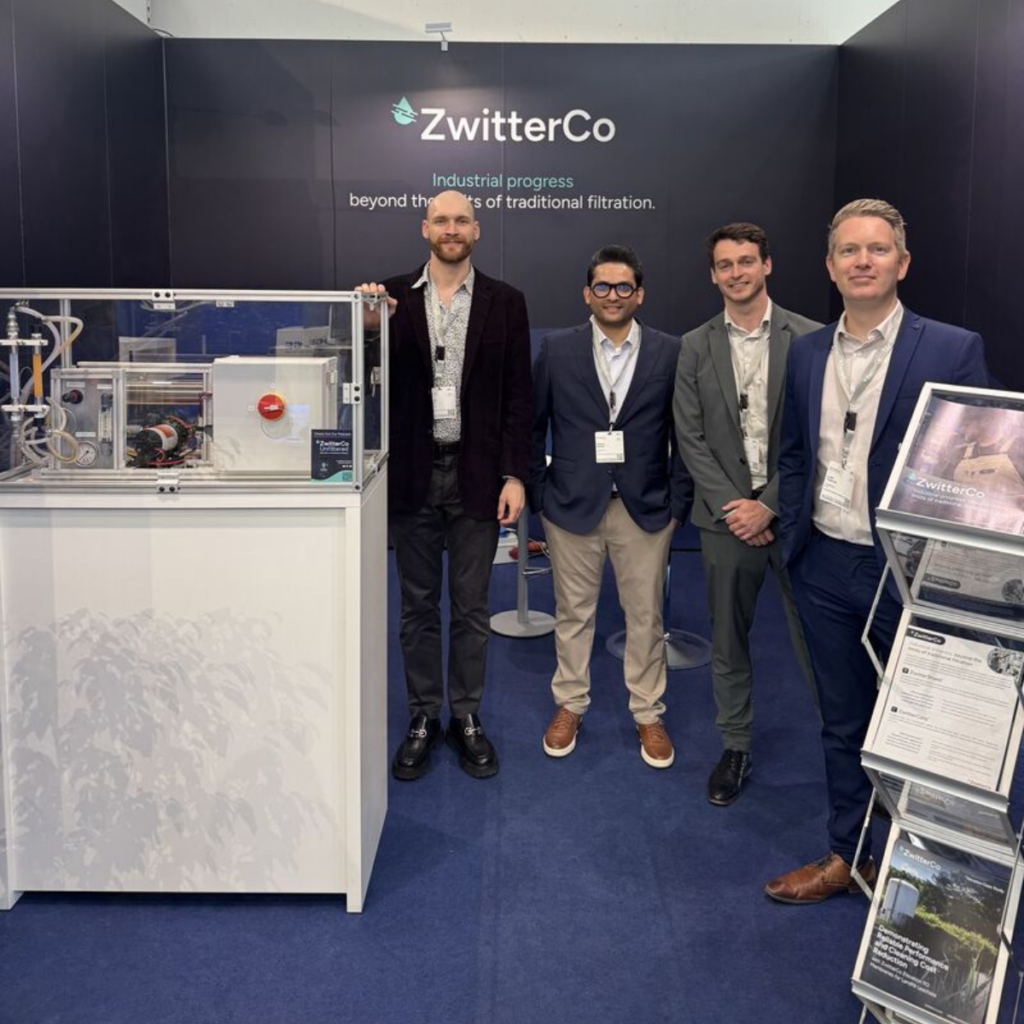
At the ZwitterCo booth, many of the discussions centered around the practical realities facilities are dealing with every day. Landfill leachate systems facing persistent fouling. Digestate operations trying to reduce hauling and storage costs. Food and beverage plants managing highly variable wastewater composition. Facilities exploring reuse opportunities while trying to avoid adding operational complexity.
A live demonstration of the ZwitterCo SF Suitcase system became a useful starting point for a lot of those conversations. Rather than discussing wastewater treatment in abstract terms, visitors could watch a compact filtration system operating in real time and talk through specific applications they were seeing in the field.
One thing that stood out throughout the week was how common many of the operational pain points were across industries. While wastewater chemistry and fouling behavior vary significantly from application to application, many facilities are still dealing with the same underlying challenges:
- Membrane fouling driving excessive cleaning frequency
- Higher chemical consumption and operating costs
- Variability in feed streams creating unstable operation
- Pressure to improve discharge quality or enable reuse
- Limited room for additional pretreatment infrastructure
Landfill leachate remained a major topic at the show. Discussions throughout the event highlighted increasing regulatory pressure around PFAS, ammonia, and overall discharge quality. There was also growing interest in long-term treatment strategies as facilities evaluate hauling costs and disposal limitations.
Digestate treatment was another area generating significant interest. Biogas and anaerobic digestion projects continue expanding, but liquid digestate management remains one of the more difficult operational and economic challenges for facilities. Conversations frequently focused on concentration, nutrient management, and reducing liquid volumes prior to storage, disposal, or downstream polishing.
There was also strong interest in wastewater reuse, particularly among food and beverage processors and industrial manufacturers. In many cases, facilities are no longer evaluating reuse purely as a sustainability initiative. Water scarcity , discharge limitations, and operating costs are increasingly making reuse projects economically necessary.
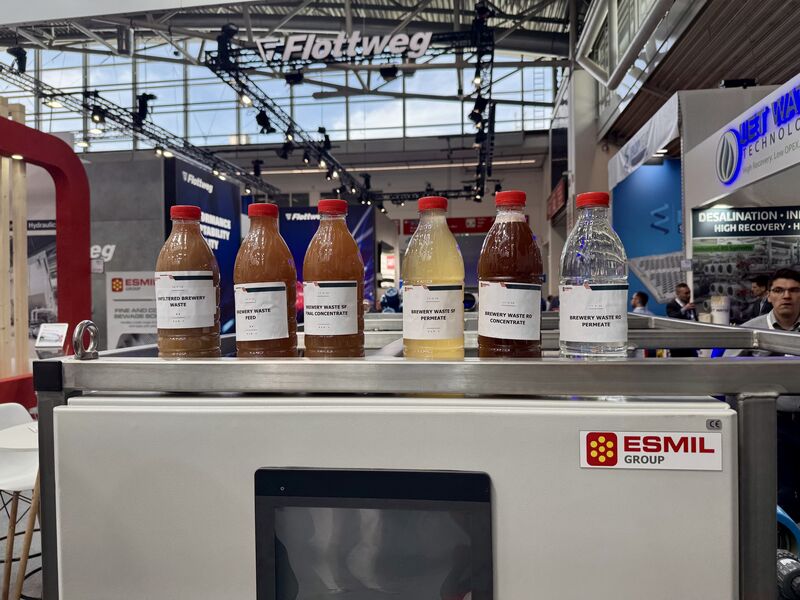
Another interesting moment during the week was seeing ZwitterCo membranes displayed at the Esmil booth alongside brewery wastewater samples showing feed, permeate, and concentrate streams across different treatment stages. The display became a natural conversation point for visitors interested in separation performance, concentrate streams, and wastewater polishing. It was also a reminder of how collaborative the industrial water industry can be at events like IFAT, where technology providers, integrators, and operators are often working through common technical problems from different angles.
Beyond the technology discussions, IFAT continues to be valuable because it brings together people dealing with real operational constraints. Many of the most productive conversations were not about ideal-case scenarios or future concepts. They were about facilities trying to keep systems online, reduce maintenance burden, meet permit requirements, and make existing infrastructure work more reliably.
That practical focus defined much of IFAT Munich 2026. The industry is moving toward more resilient wastewater treatment strategies, but operators are still looking for solutions that can fit into real plants with real operational limitations. The conversations throughout the week reflected that shift clearly.
Want to learn more about ZwitterCo membranes and systems? Contact us today.