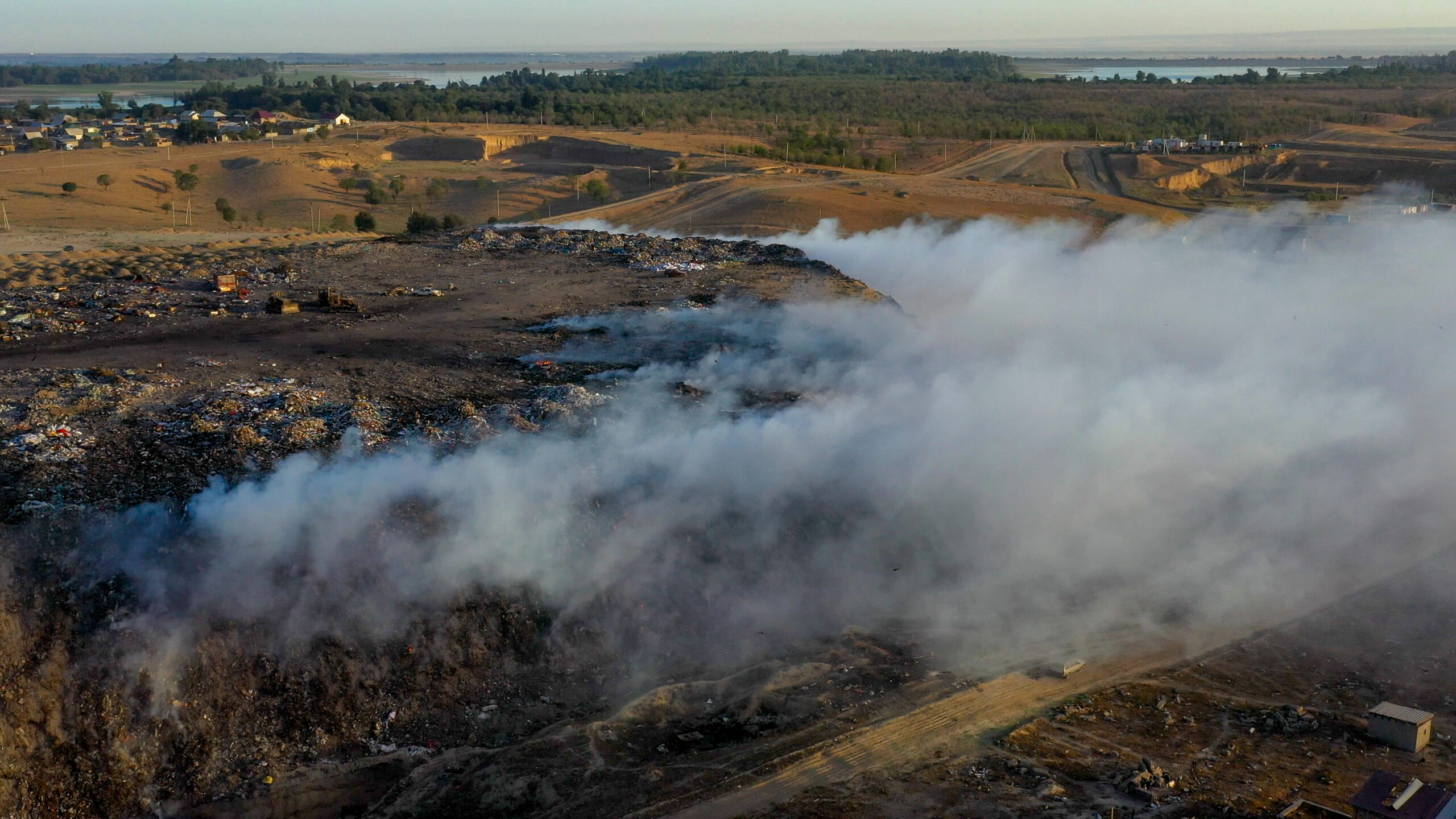
France has some of the most stringent discharge standards in Europe when it comes to landfill leachate. Landfill operators must comply with Code de l’Environnement obligations, which regulate discharges into natural water bodies. These regulations place particular emphasis on controlling chemical oxygen demand (COD) and ammonia, both of which are present at elevated levels in landfill leachate, with concentrations that vary significantly depending on the age and biological maturity of the landfill.
COD and ammonia nitrogen concentrations in untreated landfill leachate vary widely depending on landfill age, with COD ranging from several hundred to tens of thousands of mg/L, and ammoniacal nitrogen often increasing from a few hundred mg/L in young landfills to well over 1,000 mg/L in mature sites. Yet, effluent must be reduced to a fraction of these levels to meet discharge permits, protect aquatic ecosystems, and avoid costly fines.
Understanding the French Standards
The French Water Code (Code de l’Eau) enforces limits on COD, ammoniacal, and total nitrogen in treated leachate. While exact limits vary by discharge type, typical thresholds for landfill leachate are:
- COD: often required below 125 mg/L for discharge into surface water, aligned with EU Urban Wastewater Directive standards.
- Total Nitrogen: usually <30 mg/L, with stricter thresholds near sensitive catchments or Natura 2000 sites.
- Ammonia: frequently capped at <10 mg/L due to toxicity risks for aquatic life.
These benchmarks leave little room for error. While biological treatment can reduce biodegradable COD and contribute to ammoniacal nitrogen removal under favorable conditions, it often struggles with the high variability, elevated ammoniacal nitrogen concentrations, and increasingly recalcitrant organic fraction characteristic of landfill leachate, particularly as sites mature. As a result, reverse osmosis (RO) is increasingly deployed as a final polishing step to reliably meet COD and ammoniacal nitrogen discharge limits.
ZwitterCo in Action: COD & Ammonia Under Control
At the Sytraival landfill site in France, operator Serpol faced exactly these challenges. The leachate stream showed COD above 670 mg/L and nitrogen species over 450 mg/L. Previous conventional RO systems rapidly fouled and required near-constant chemical cleaning (7x/week), driving up operating costs and making reliable operation difficult.
In 2024, Serpol turned to ZwitterCo Elevation RO membranes. Elevation membranes use ZwitterShield™ technology that creates a permanent hydrophilic surface barrier. This technology repels organics and prevents irreversible fouling, ensuring long-term stable performance.
The results were decisive:
- COD reduced by over 99%, from 672 mg/L to below 5 mg/L.
- Ammoniacal nitrogen (assessed via TKN) was reduced from 412 mg N/L to 21.9 mg N/L, achieving 94.7% removal
- Total metals were reduced to <0.12 mg/L, well below the applicable Pt limit (<10 mg/L)
Just as importantly, cleaning frequency was reduced by nearly 50%, clean water use for cleaning fell by 43%, and total cleaning costs per cubic meter dropped by approximately 50%.
Why This Matters for Compliance
Landfills across France must demonstrate continuous compliance with COD and nitrogen permits under Code de l’Environnement. ZwitterCo Elevation membranes provide operators with:
- Assured Barrier Performance – Consistent COD and ammoniacal nitrogen rejection, maintaining permeate quality below French discharge limits.
- Operational Stability – membranes resist fouling from organics, unlike conventional RO which fails under these organics.
- Lower Risk of Non-Compliance – reduced unplanned cleanings help maintain stable rejection and permeate quality, minimizing compliance excursions.
- Alignment with Water Agency Objectives – advanced treatment that improves the reliability of COD and ammonia compliance aligns with the pollution-reduction goals commonly supported by regional Agences de l’Eau.
For landfill operators in France, the challenge is not whether compliance is required – it is how to meet COD and nitrogen thresholds day in and day out, even as leachate quality changes. The Sytraival case proves that with ZwitterCo Elevation membranes, operators can meet French Water Code discharge requirements with confidence, while also reducing costs.
Landfills don’t need to choose between compliance and efficiency. With Elevation membranes, they achieve both.
Contact ZwitterCo to talk through your leachate treatment challenges and see whether Elevation membranes are the right fit for your application.