

Concentrate and purify enzymes with more productive membranes.
Enzyme production often relies on membranes to concentrate and purify streams in downstream processing after initial fermentation. Due to the organic nature of post-fermentation streams, conventional membranes often experience fouling that leads to frequent and difficult cleanings, decreased flux, and shorter membrane lifetime. Processors can address these conventional membrane issues by utilizing a step forward in membrane chemistry with anti-fouling zwitterionic Evolution membranes. By using Evolution membranes, users can experience a higher sustainable average flux, simpler and faster cleanings, and stable membrane operation.
Application Details
Large-scale enzyme production relies on biotechnology processes to produce enzymes for food, pharmaceutical, and industrial applications. As the main biological process occurring, fermentation is a major step in enzyme production. Bioreactors containing fungi, bacteria, or other organic sources are used to control fermentation processes and maximize enzyme production. After fermentation, a variety of downstream processing steps are needed to isolate, concentrate, and purify the desired enzyme product.
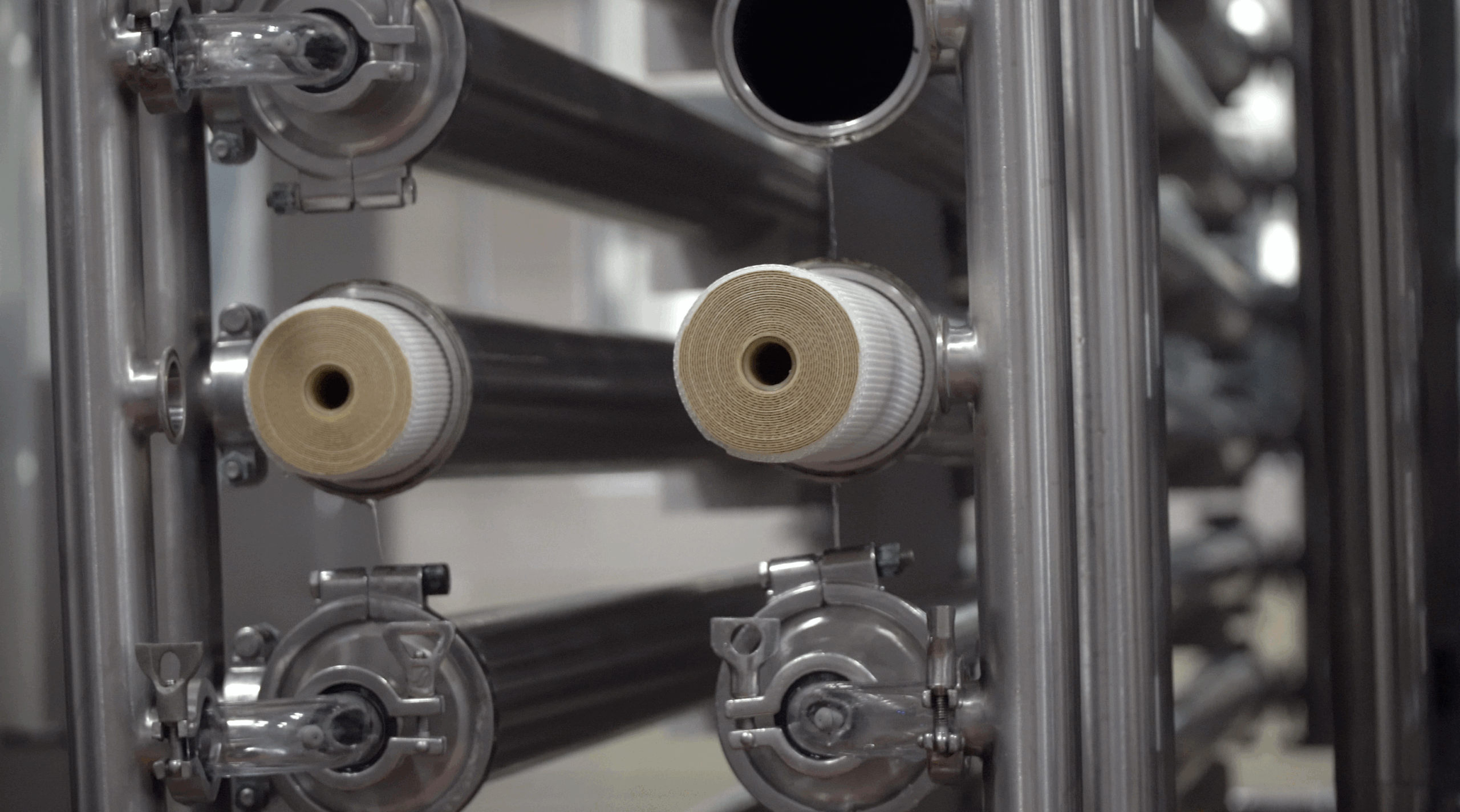
Following initial bulk solids removal and various pretreatment steps, spiral-wound membranes are a common option for concentration and purification in downstream processing. Membranes separate the desired enzyme product from non-desired species and concentrate it before further processing. To make a final product, polishing steps and drying steps, when applicable, are utilized.

Membranes Used in Enzyme Production
For concentration and purification in downstream processing of enzyme production, a variety of ultrafiltration (UF) or nanofiltration (NF) membranes may be used depending on the molecular weights of the species involved. Conventional spiral-wound UF membranes used most often feature a polyethersulfone (PES) chemistry, while conventional spiral-wound NF membranes used most often feature a piperazine polyamide chemistry. Both of these conventional chemistries have remained largely unchanged for decades.
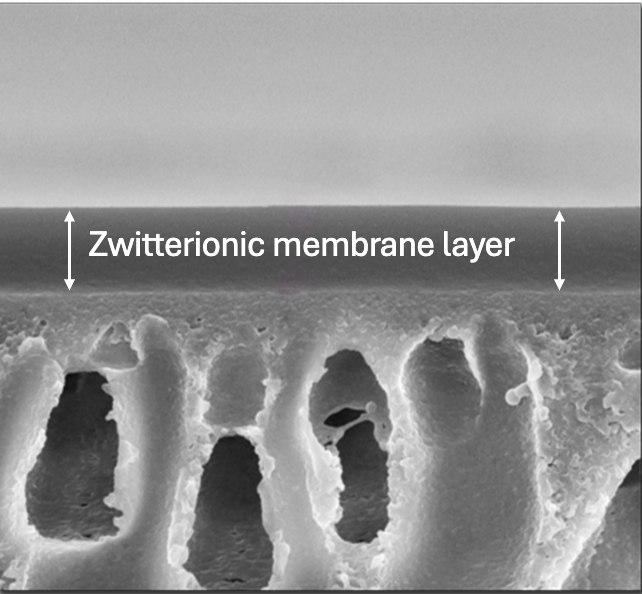
With the anti-fouling zwitterionic chemistry utilized in Evolution membranes, enzyme processors can experience a major step forward in membrane productivity. By offering the highest resistance to organic fouling, Evolution membranes minimize gel layer formation at the membrane surface compared to conventional membranes. This allows users to experience a higher average sustainable flux, more stable operations, and simpler and faster cleanings. Depending on the size of the species involved, users have multiple options to choose from: Evolution Protein Concentration Membrane (PCM) and Evolution Superfiltration (SF) membranes.
Boost productivity
Evolution PCM and SF membranes feature an anti-fouling membrane chemistry that minimizes gel layer formation, leading to increased productivity for end users.
Save 50% on cleaning costs
The simplified cleaning program enabled by Evolution PCM and SF membranes eliminates cleaning steps, saving money on chemicals, water use, and utilities while driving sustainability outcomes.
More time for producing
Evolution PCM and SF can reduce cleaning time by one hour or more per day—freeing operators to focus on critical tasks and increasing system uptime.
No system changes required
Evolution PCM and SF membranes are direct replacements for conventional products so that no system modifications are necessary.

Podcast: ZwitterCo Unfiltered
ZwitterCo Unfiltered: Real Talk on Membrane Filtration is a candid, experience-driven podcast exploring real-world membrane applications across food processing, water, and wastewater treatment.
Achieve stable and scalable enzyme manufacturing.
With novel anti-fouling technology, Evolution membranes allow enzyme manufacturers to reliably purify and concentrate streams where conventional membranes might have failed. By minimizing gel layer formation at the membrane surface, Evolution membranes increase productivity with higher and more sustainable average flux.
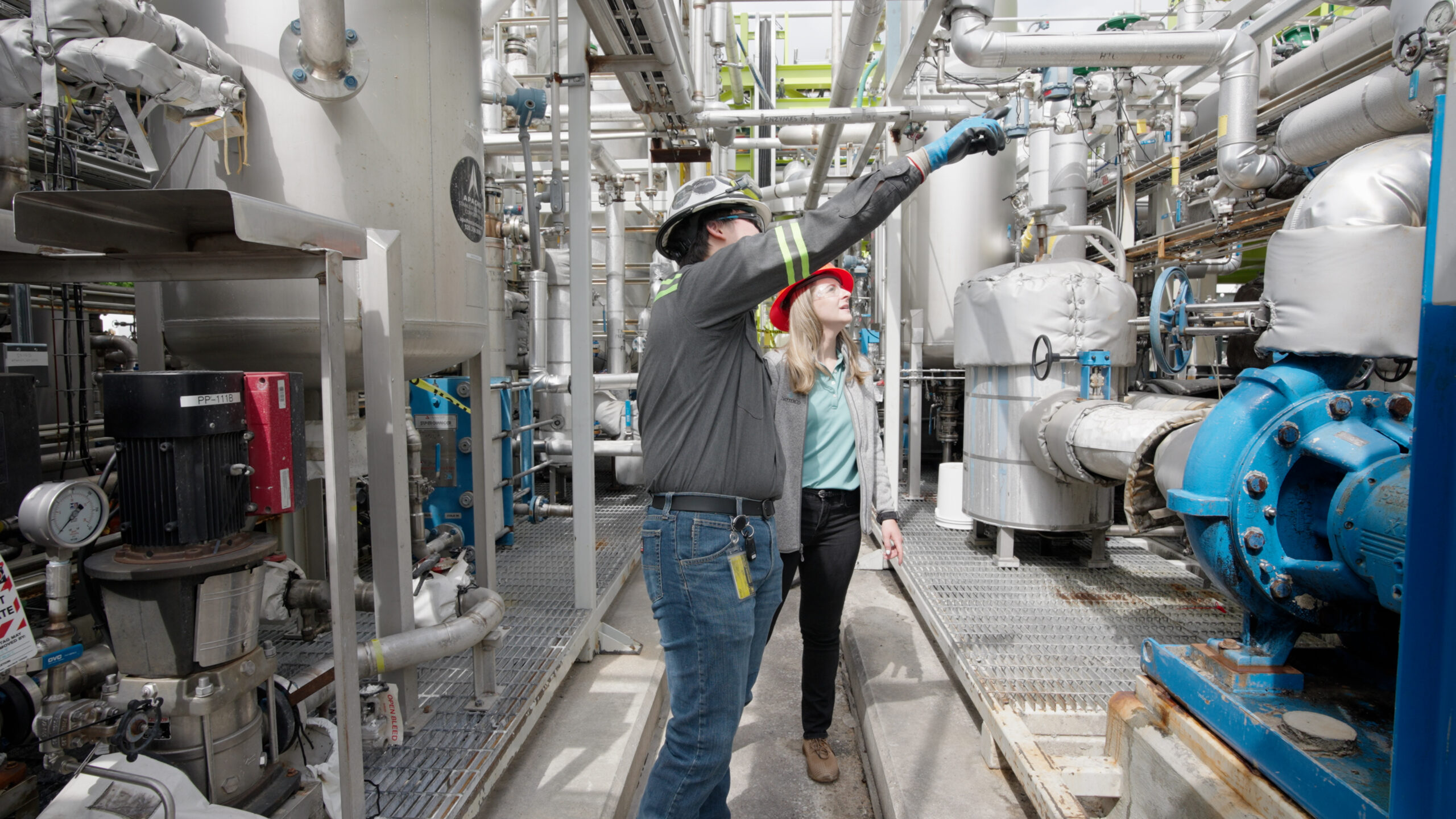

“Without ZwitterCo membranes, our process would not be possible or profitable.”
– Dr. Konrad Miller, VP, Manufacturing, Science, & Technology, Solugen
Increase plant efficiency.
Evolution membranes operate at a more stable flux than conventional membranes, resulting in a higher average flux, allowing users to benefit from greater productivity and longer runs before cleaning. This allows for producing more from existing equipment with stable and predictable performance, increasing overall plant efficiency.
To see how Evolution SF helped Solugen, click here.
Longer production runs and stable flux.
Evolution membranes offer the highest resistance to organic fouling, which results in stable membrane flux and less frequent cleanings.
Downstream processing to produce organic acids becomes more predictable and profitable by utilizing these anti-fouling membranes. In addition, users reduce water, chemical, and energy use with Evolution membranes, allowing them to make sustainability gains.
Easier and less frequent cleanings.
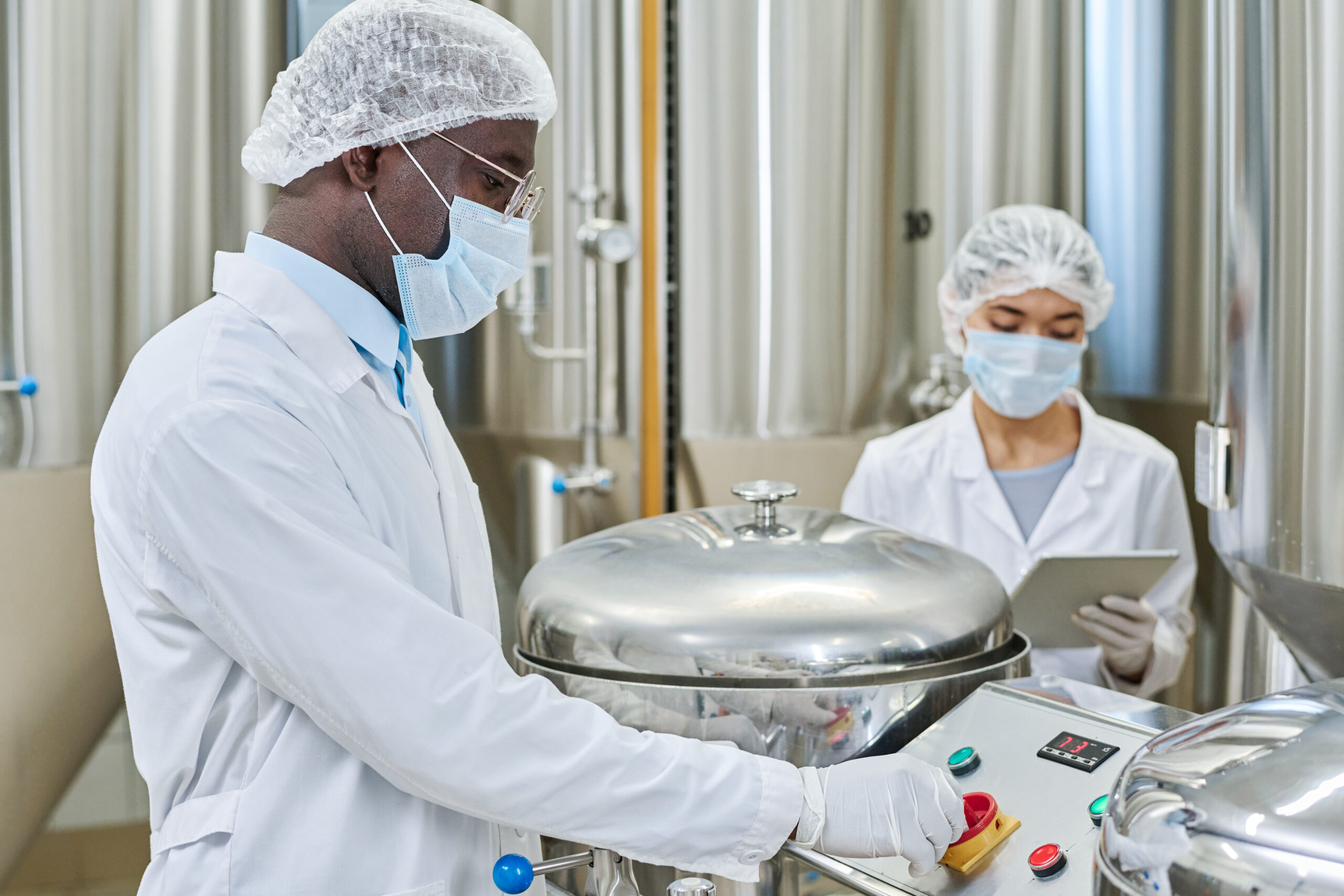
Experience the simplest membrane cleaning program possible for protein processing while achieving full permeance recovery, thanks to Evolution membranes’ high resistance to organic fouling.
By cleaning less frequently while recovering performance, users achieve longer production runs, higher product yield, and lower operating expenses.
Mott Case Study
Speak with our engineers to discover ways that ZwitterCo can support positive changes at your plant. With our help, you can reduce your hauling and avoid heavy OPEX spend on plant expansion.
Learn More

Industrial Wastewater Reuse
ZwitterCo has only polymeric membranes that can filter high strength organic streams without rapid and irreversible fouling. More description here to describe the kind of solutions we offer for NMP.
Learn More
Challenging Surface Water Treatment
Write a description about how we solve challenging surface water treatment problems. EMP for pure water.
Learn More
High Value Protein & Co-Product Separation
Write copy about our solution for protein bioprocessing co-product creation – EMP Process.
Remove Bulk Organics
Remove tough to fight organics, such as fats, oils, grease, and protein.
Fully Chlorine-Intolerant
Can endure aggressive cleaning without wear and tear
Runs at Low Pressure
Runs at low pressure by not removing salt, sugar, alcohol’s or other small molecules.
Replaces Biological Systems
Replace biological systems or coagulation/flocculation processes commonly used to treat organics.