

Maximize productivity and simplify cleaning with Evolution RO in lactose concentration.
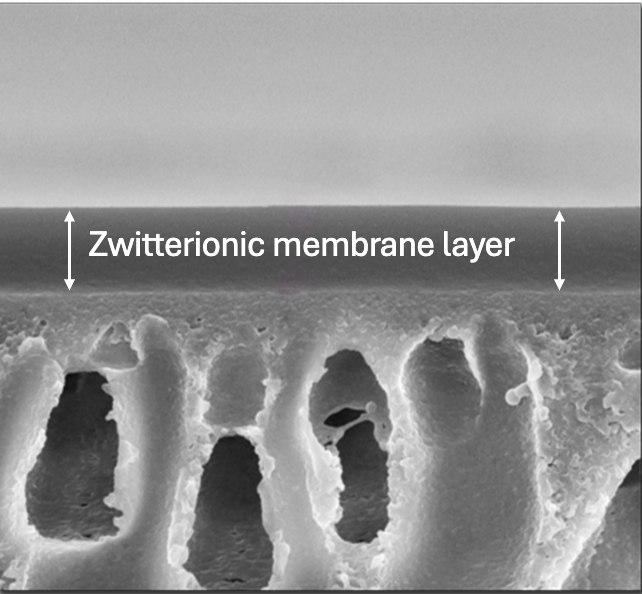
To ultimately produce a solid lactose product, RO membranes are used before drying to concentrate lactose-rich streams in dairy processing. For the first time since RO started being used for lactose concentration, a major improvement to membrane chemistry is now available: the anti-fouling zwitterionic chemistry used in Evolution RO membranes. By using Evolution RO membranes, users can experience thinner gel layers than those on conventional membranes, resulting in a higher average sustainable flux and a simplified cleaning program that saves an hour or more of time each day.
Application Details
Lactose is a naturally occurring sugar found in milk and has a variety of uses in a concentrated solid form. It can be used in infant foods, dairy products, bakery products, confections, pharmaceutical products, and more. As protein demand drives increased production of dairy products like whey protein concentrate and isolate (WPC and WPI) and milk protein concentrate and isolate (MPC and MPI), more opportunities for lactose-rich streams are created.
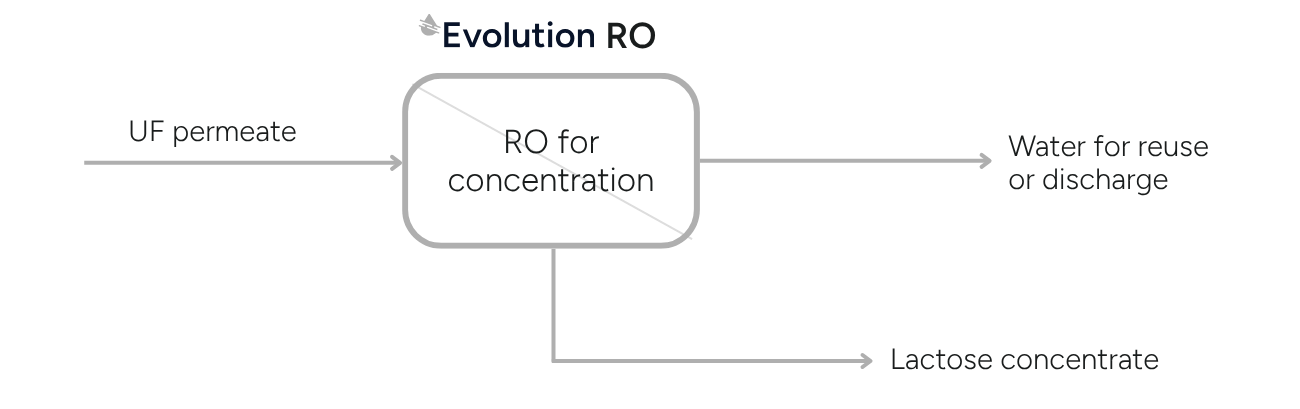
In WPC, WPI, MPC, and MPI processing, ultrafiltration (UF) membranes separate and concentrate proteins from smaller components, like lactose. The smaller components, including lactose, transfer into the UF permeate and create a lactose-rich stream. That lactose-rich stream is then sent to an RO system for further concentration. The concentrate from the RO is then refined and dried to be sold as a solid lactose product.
The permeate from the lactose concentration RO system can be sent to a permeate polishing system. Click any of the below links to learn about other applications referred to in this section:
Membranes Used in Lactose Concentration
Conventional RO membranes used in lactose concentration are based on a thin-film composite polyamide chemistry that has remained largely unchanged for decades. While these membranes work, there is now an anti-fouling option that provides even more value to dairy processors: Evolution RO membranes.
Evolution RO membranes are built with ZwitterShield™ technology, which bonds zwitterionic chemistry to proven membrane chemistries to equip them with a permanent barrier to irreversible organic fouling. With this technology, Evolution RO allows users to simplify their cleaning programs by eliminating the costly enzyme step completely. In addition, the anti-fouling zwitterionic chemistry decreases gel layer formation in applications like lactose concentration, increasing overall productivity through the membrane.
Increase productivity
Evolution RO membranes use an anti-fouling zwitterionic chemistry that decreases gel layer formation, increasing overall productivity through the membrane.
More sustainable operations
By reducing chemical usage, water consumption, wastewater generation, and energy demands, Evolution RO membranes support more sustainable operations and help lower carbon intensity scores.
Save time & money on cleaning
Evolution RO eliminates the need for enzyme washes and creates cleaning programs that save over 50% in costs and more than an hour per day of time.
Simple integration
Evolution membranes are one-for-one substitutions for industry-standard products—no system modifications or new CAPEX required.

Podcast: ZwitterCo Unfiltered
ZwitterCo Unfiltered: Real Talk on Membrane Filtration is a candid, experience-driven podcast exploring real-world membrane applications across food processing, water, and wastewater treatment.
Simplify cleanings & reduce chemical usage.
Evolution membranes offer easier and quicker cleaning programs that require fewer chemicals, aligning with sustainability goals and cutting operational expenses for dairy processing companies.
Review our on-demand webinar to learn more about increased productivity with Evolution membranes.
Achieve a higher average flux.
Evolution membranes contribute to increased productivity by simplifying cleaning programs and achieving a higher sustainable average flux, which has been observed in multiple tests.
Because the anti-fouling nature of the membranes minimizes foulant build-up at the membrane surface, operators can experience a higher membrane flux.
Meet sustainability goals.
Evolution membranes help dairy processors meet sustainability targets thanks to the benefits provided by a shorter and simpler cleaning program. These benefits include:
- Less freshwater demand
- Decreased energy requirements
- Reduction in chemical usage
- Less wastewater generation

Mott Case Study
Speak with our engineers to discover ways that ZwitterCo can support positive changes at your plant. With our help, you can reduce your hauling and avoid heavy OPEX spend on plant expansion.
Learn More

Industrial Wastewater Reuse
ZwitterCo has only polymeric membranes that can filter high strength organic streams without rapid and irreversible fouling. More description here to describe the kind of solutions we offer for NMP.
Learn More
Challenging Surface Water Treatment
Write a description about how we solve challenging surface water treatment problems. EMP for pure water.
Learn More
High Value Protein & Co-Product Separation
Write copy about our solution for protein bioprocessing co-product creation – EMP Process.
Remove Bulk Organics
Remove tough to fight organics, such as fats, oils, grease, and protein.
Fully Chlorine-Intolerant
Can endure aggressive cleaning without wear and tear
Runs at Low Pressure
Runs at low pressure by not removing salt, sugar, alcohol’s or other small molecules.
Replaces Biological Systems
Replace biological systems or coagulation/flocculation processes commonly used to treat organics.